Category Economic Development

Reconnecting to Humanity

There is a distinct kind of magic that happens in the quiet beats between big speeches. At TED2026, those moments—the short films, performances, and animations known as interstitials—told a profound story about where we are right now. They captured a culture suspended between two powerful gravity wells: the deeply human need for community and the undeniable, sometimes spooky rise of the machine.

Curated by producers CC Hutten and Grace Poppe alongside Flux Festival’s Jonathan Wells, this year’s lineup felt less like a simple intermission and more like a mirror.

On one side, the programming grounded us in raw, tactile humanity. There was Scared of Loving Wild Again, a quiet 16mm film that focuses entirely on the syntax of human hands, proving how much emotion can be conveyed in a simple touch. There was Musica Quarantena, an animated short capturing the unexpected intimacy neighbors forged through windows and music during isolation.

But right alongside that warmth sat our digital shadows. The program leaned heavily into AI and automation, challenging the room with sharp, satirical questions about our future. An AI mockumentary titled ENERGYM depicted a future in which humans find purpose only by physically powering the very machines that replaced them. In another moment, an entirely AI-generated TED Talk posed a haunting question to the theater: What kind of ancestors will we become?

It is this exact friction—the hand-drawn versus the algorithmic, the warmth of memory versus the efficiency of code—that defined the experience. The interstitials didn’t offer an easy answer on how to balance these forces. Instead, they reminded us that as technology accelerates, protecting the spaces where we connect is entirely up to us.
Read more…

Community Development

From What’s Wrong to What’s Strong — Rethinking Community Development

Introduction

Community development has long been dominated by top-down approaches that focus on problems, deficiencies, and needs. However, in his TEDxExeter talk, Cormac Russell presents a compelling case for a paradigm shift: one that begins with the strengths and assets already present in individuals and communities.

The Problem with Traditional Helping Models

Russell outlines the unintended harms caused by conventional methods of helping:

  • People are defined by their deficiencies rather than their capacities.
  • Resources often benefit service providers more than the intended recipients.
  • Grassroots action is stifled by professional and bureaucratic control.
  • Communities internalize negative labels, leading to dependency on external solutions.

These models, while well-intentioned, ultimately disempower the very people they aim to support.

Asset-Based Community Development (ABCD)

Inspired by the work of John McKnight and Jody Kretzmann, ABCD focuses on identifying and mobilizing the existing strengths within communities. After conducting over 3,000 interviews in 300 neighborhoods, McKnight and Kretzmann identified six key assets that drive sustainable community change. These include:

  • Individuals’ talents and skills
  • Community associations
  • Institutions
  • Physical assets
  • Economic resources
  • Stories and culture

Real-World Applications

Leeds, UK

In Leeds, community builders trained under Russell’s program have focused on elderly care, especially combating loneliness. Rather than isolating seniors in programs, they are integrated into the heart of community life. The story of Robin, an elderly widower passionate about carving walking sticks, highlights how personal passions can spark communal engagement and purpose.

Wirral, UK

Frank, a community artist in Wirral, tackled environmental degradation by turning a littered beach into a symbol of civic pride—a pirate ship called the Black Pearl. Instead of relying on government clean-up efforts, Frank involved locals in a creative solution, thereby fostering community ownership and involvement.

Kigali, Rwanda

In Kigali, parents and community builders reimagined the role of education by integrating vocational training and community support. They addressed issues like street children and teacher welfare not through traditional policies, but through local collaboration and innovation.

The Philosophy of Mutual Liberation

Russell emphasizes that real change arises from mutual effort. Quoting Aboriginal elder Lilla Watson: “If you’ve come to help me, you’re wasting your time. But if you’ve come because your liberation is bound up with mine, then let us work together.” This sentiment underlines the importance of solidarity, co-creation, and shared ownership in development efforts.

Conclusion

The movement from focusing on “what’s wrong” to “what’s strong” challenges us to rethink how we support communities. It urges professionals, policymakers, and citizens to embrace a more respectful, inclusive, and empowering model of development—one that sees every individual not as a problem to be solved, but as a solution in waiting. By identifying and mobilizing local assets, communities can unlock their full potential and create enduring, meaningful change.

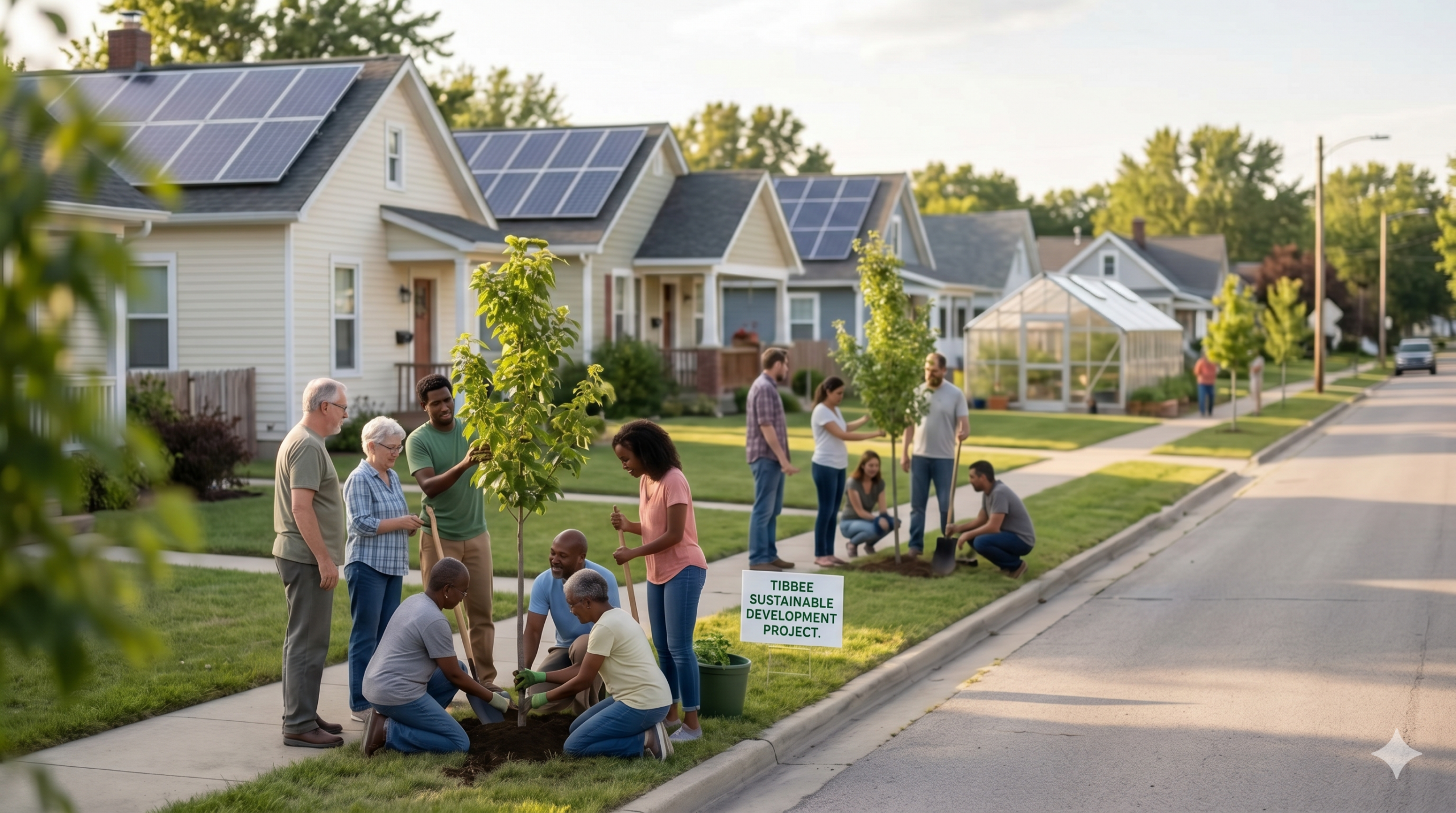
Sustainable Community Development

Southeast Sustainability Directors Network (SSDN): SSDN is a network of local government sustainability professionals from various cities and counties across the Southeast. They focus on collaborative learning, state policy programs, and federal initiatives aimed at creating clean and healthy communities. SSDN supports municipal sustainability professionals with resources, collaborative opportunities, and best practices in urban sustainability. Their programs include the Southeast Sustainable Recovery Center and Environmental Finance Center​ (SESDN)​.

EPA’s Building Blocks for Sustainable Communities: This program works with local communities to develop smart growth solutions that benefit both human health and the environment. The program emphasizes a flexible, community-led process to develop strategies for vibrant, walkable, and revitalized neighborhoods. It partners with communities to address environmental justice concerns, preserve natural resources, and facilitate economic growth​ (US EPA)​.

Neighbors for Better Neighborhoods (NBN): Based in Winston-Salem, NC, NBN empowers community leaders through the asset-based community development framework. They focus on bringing residents to the table for decision-making processes that impact their communities, advocating for health, safety, learning, prosperity, and justice at the community level. NBN’s initiatives aim to strengthen neighborhoods by leveraging local resources and resident leadership​ (NBN Community)​.

Spruce Root: Although based in Southeast Alaska, Spruce Root’s approach to sustainable community development through business coaching, financial resources, and workshops is a model that can be adapted for other regions. They provide comprehensive support for local entrepreneurs, fostering economic development and job creation through their Path to Prosperity and other sustainability-focused programs​ (Spruce Root )​.

This Neighborhood Badly Needs A Grocery Store. A Medical Device Maker Will Build One

After big-box grocery chains left the Arlington Woods neighborhood in Indianapolis, residents were traveling at least five miles to get groceries. Medical device manufacturer COOK Medical is building a plant in the community and, after listening to residents, decided to add a grocery store to its plans.
Luis Alvarez/Getty Images

Arlington Woods, a predominantly African-American neighborhood in Indianapolis, has seen big-box grocery chains close one after another over the past few years. The area is a food desert with no full-size grocery store within a 4-mile radius.

Read more…

How To Make Sustainability More Profitable

By Jim Granat

The focus on eco-friendly or “green” initiatives might feel like a passing trend, but with the public’s interest in global warming, pollution, water consumption, and other far-reaching issues, it’s much more than a fad.

Instituting more sustainable business practices can mean real cost savings, from lower energy costs to tax incentives, but businesses can also gain loyal clients and end-users looking to do business with like-minded organizations.

A recent study found that more than 50% of Gen Z shoppers (the generation following millennials) are willing to pay more for a sustainable product. With one of the youngest generations showing a marked interest in protecting the planet and its resources, a true focus on sustainability can help your business emerge as a leader now and in the years to come.

Read more…

‘Improving Human Wellness One Farm At A Time’ Sensei Ag CEO Sonia Lo To Lead Keynote Presentation At In-Person October 2021 Indoor Ag-Con

Lo To Discuss Sensei Ag’s Form Factor Agnostic & Scalable Approach to Indoor Agriculture on Monday, October 4, 2021

Press Release – Sensei Ag CEO Sonia Lo will lead the Indoor Ag-Con keynote presentation, “Improving Human Wellness One Farm At A Time,” on Monday, October 4, 2021, from 11:30 am – 12:20 pm. A headliner event at the October 4-5, 2021 edition of the premier trade show and conference for the indoor | vertical farming industry at the Hilton Orlando, Lo’s discussion will focus on Sensei Ag’s form factor agnostic approach to building and expanding indoor farms.

Themed “Growing Your Business,” Indoor Ag-Con will give attendees the opportunity to explore new resources on the expo floor and hear from Lo, other CEOs, thought leaders, and industry experts from today’s cutting-edge farms and innovative companies.

Read more…

Walking in Indy


I spent four days at a convention and was pleasantly surprised by how walkable the downtown area was.

According to Next City, Indianapolis has invested a significant amount of money to make that possible. Kudos to the city planners and to all the people that helped make the changes a success.

“But in 2010, Indianapolis saw an infusion of $500 million after it sold its water and sewer utility to a public charitable trust. That money was designated for investment in infrastructure projects in a five-year program called RebuildIndy. Fifty public meetings were held to gather ideas for how to spend the money.”

Read more on the Next City site…
Homeless

There was an apparent issue with homelessness that seems to plague every large city. Apparently, Indianapolis is attempting to rectify the problems according to the Bloomberg article.

Punitive measures only trap people in a homelessness-jail cycle. Indianapolis is showing that there’s a better way.

Envision Broad Ripple

A better example of urban planning is the Envision Broad Ripple initiative, a community-driven, City-endorsed effort. When implemented, the Envision Broad Ripple plan should fix many of the defects in existing zoning, which currently necessitates a painful and politically risky variance process for nearly every proposal While neighbors would always like to be able to veto any development they don’t like, and the variance process provides a venue to do that, this type of political risk is a huge drag on investment. As someone once put it, political risk is the only real risk in real estate development if you know what you are doing. Creating a predictable environment for approvals is crucial to luring more investment. There is a key but often missed the link between the poor business climate created by the zoning environment in central Indianapolis and the disinvestment we see. This doesn’t mean I advocate low standards. In fact, standards can be high, but they need to be objective and achievable with reasonable financial estimates. Ultimately the type of development the neighborhood would like to see should gain approval immediately in the majority of cases.


Sights around town